"We only feel dehumanized when we get trapped in the derogatory images of other people or thoughts of wrongness about ourselves. As author and mythologist Joseph Campbell suggested, "'What will they think
of me?' must be put aside for bliss." We begin to feel this bliss when messages previously experienced as critical or blaming begin to be seen for the gifts they are: opportunities to give to people who are in pain."
~
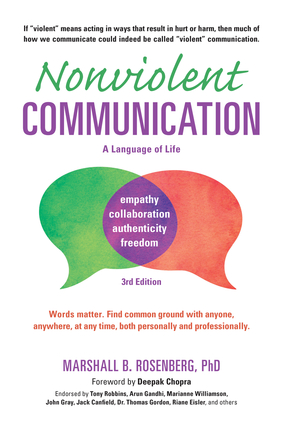
Marshall B. Rosenberg, Nonviolent Communication: A Language of Life
Featured Article
Why Am I So Depressed?
By Rachelle Lamb and Nonviolent Communication
I feel depressed because I have needs that are not being satisfied. Well, maybe. Indeed it’s one way to frame and explore a depressed state. There’s more to the story however than what the above diagnostic statement suggests. We risk framing and treating people’s problems superficially if the prevailing reflex around what troubles them is primarily based in the identification of one’s personal needs as
being the most effective means for resolving issues. What we often overlook in client-centred conversations is the degree to which one’s individual health and well being is greatly dependent on the state of health of everything that surrounds and sustains us in our human lives. This is an understanding that doesn’t receive the attention it deserves at the best of times and is even less likely to be considered by someone in a depressed state. This is especially true in a culture that promotes and
reinforces the doctrine of being self-made.
Imagine that a plant is withering in your garden. Would you concentrate solely on the plant and its drooping leaves or would you examine the soil and the plant’s placement. You would likely consider the temperature, light levels, look for signs of pest infestation. When it comes to
our gardens, we are likely to consider the WHOLE. We recognize the that the plant’s health is entirely dependant on the health of everything around it. And yet when it comes to human health, we are much more likely to proceed with a pointed focus on the individual.
" Between stimulus and response there is a space. In that space lies the freedom to choose our response."
~ Viktor Frankl
Article
Making Effective Requests
By Alex Censor
Part-I: When is a request not a request -- and why you might want to
know.
Ever make a seemingly reasonable request of someone and had them get their back up in reaction? Or had someone respond in a way making tragically clear they misunderstood what you’re asking? Or, perhaps worse, they appeared to agree yet didn’t follow through – or later denied you ever asked them?
Or maybe you've been on the other end? You’re blind-sided, discovering someone’s resentful or angry at you for your not having done something (perhaps something you might’ve been willing to do) but you can't remember they asked -- or you do recall they expressed something about it, but certainly you’d never agreed to it?
I've sure have been on both ends. Sure, it could be something about others that explains such bollixes – but often when I've done an autopsy on the resulting mess it became clear if I had more skill at making requests (or, more important, if I'd been conscious of whether I was subtly demanding rather than requesting) my message might’ve gotten through -- Or at least I’d have known it didn’t and avoided the disappointment based on my
mistaken assumption that it had.
These scenarios are more common than I like. Maybe it’s because our culture gives as mixed messages about asking for our needs ("nice people don't put others on the spot," vs. "It never hurts to ask" and "If you don't assert your needs no one else will"), or simply because it teaches us counterproductive ways of asking others for what
we want.
From my years of experience as an NVC (nonviolent communication) facilitator (www.cnvc.org), and by screwing up often, I’m convinced there are two different facets of skills and awareness in making requests, that if mastered, serve me, and those around me, well...
You may have heard how I-messages or I-statements, when you use them in your conversations, serve those conversations. “What,” you may ask, “is an I-message?”
I-messages or I-statements happen when you talk about your own feelings, beliefs, or values. They come in handy when you want to give constructive criticism or to settle conflicts. You-statements, on the other hand, focus on the person you’re speaking to.
For example, “You communicated poorly when you said that.” This can sound blaming or accusatory, arousing a person’s defenses. Converting this statement to an I-message, you can say, “I had a hard time understanding what you just said.”
Marshall Rosenberg, in his book, Nonviolent Communication,
tells how to use I-messages in a masterful way without inflammatory language.
"Peace requires something far more difficult than revenge or merely turning the other cheek; it requires
empathizing with the fears and unmet needs that provide the impetus for people to attack each other. Being aware of these feelings and needs, people lose their desire to attack back because they can see the human ignorance leading to these attacks; instead, their goal becomes providing the empathic connection and education that will enable them to transcend their violence and engage in cooperative relationships."
~ Marshall B. Rosenberg, Speak Peace in a World of Conflict: What You Say Next
Will Change Your World
Article
Watch Your Language! 'Speak Their Truth': The Art of 'Nonviolent' Client Communication
By OIllie Smith | Citywire.co.UK
So-called 'soft skills' are at the heart of good financial planning practice.
As this week's podcast episode guest puts it, a financial planner has to be able to 'speak their truth with care for the other person'.
Cleona Lira, an IFA at 2plan Wealth Management, discovered the idea of nonviolent communication at a difficult time in her life, and it has since transformed not only her private life but her business too.
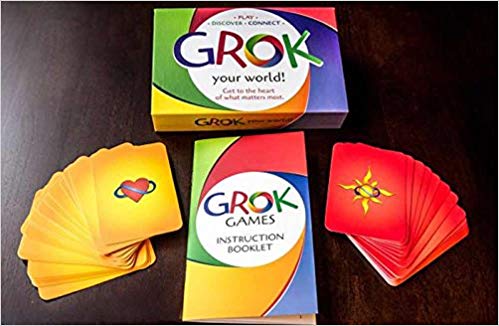
Conceived by Meiji Stewart - Illustrator David Blasidell
Other Good Stuff
NVC Primer
By Inbal and Miki Kashtan
Nonviolent Communication (NVC) has been described as a language of compassion, as a tool for positive social change. NVC gives us the tools to understand what triggers us, to take responsibility for our reactions, and to deepen our connection with ourselves and others, thereby transforming our habitual
responses to life. Ultimately, it involves a radical change in how we think about life and meaning.
Nonviolent Communication is based on a fundamental principle: Underlying all human actions are needs that people are
seeking to meet. Understanding and acknowledging these needs can create a shared basis for connection, cooperation, and more harmonious relationships on both a personal and global level. Understanding each other at the level of our needs creates this possibility because, on the deeper levels, the similarities between us outweigh the differences, giving rise to greater compassion.
When we focus on needs – without interpreting or conveying criticism, blame, or demands – our deeper creativity flourishes, and solutions arise that were previously blocked from our awareness. At this depth, conflicts and misunderstandings can be resolved with greater ease.
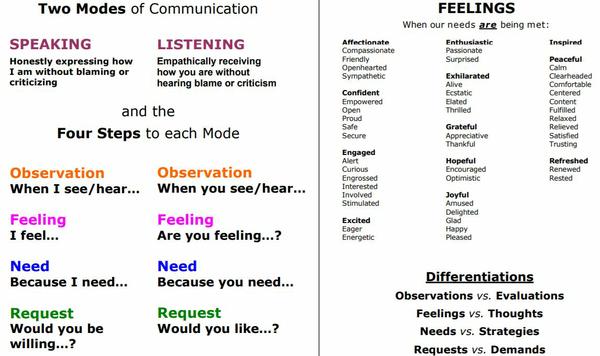
The language of Nonviolent Communication includes two parts: honestly expressing ourselves to others, and empathically hearing others...
The primary purpose of Nonviolent Communication is to connect with other people in a way that enables giving to take place: compassionate giving. It’s compassionate in that
our giving comes willingly from the heart. We are giving service to others and ourselves –not out of duty or obligation, not out of fear of punishment or hope for a reward, not out of guilt or shame, but for what I consider part of our nature. It’s in our nature to enjoy giving to one another.”
-Marshall B Rosenberg, Ph.D.
Please join me in a commitment to live from the consciousness that we are one.
Please, let every word that you speak or type be empathically cleansed of any thought or feeling of
separateness before you open your mouth or press “send”.. (This in no way implies there is a correct form!)
Please, let every word you hear be filtered by empathy so all you hear is “Please” and “Thank you”.
Please, let
every communication express our common aim of living nonviolence and compassion.
May we remember our vision and mission each and every moment, and measure our own actions (and inactions) in relation to those commitments.
I’ll Meet You There: A Practical Guide to Empathy, Mindfulness and Communication
Out beyond ideas of wrongdoing and right doing, there is a field. I’ll meet you there.- Rumi
We get connected with each other in the space that opens up when we let go of our ideas of good and bad, right and wrong. When we feel safe and connected to ourselves, we don’t need to use these labels. When we are
connected to ourselves, we are also connected to the people around us. There’s a sense of compassionate presence, intense closeness, and empathy. Through empathy we can find a way to stay connected to our humanity and to contribute to a more peaceful world. I’ll meet you there. – Shantigarbha, from the Introduction
I’ll Meet You There: A Practical Guide to Empathy, Mindfulness and
Communication by Shantigarbha is available as an eBook or paperback at Amazon or the publisher’s website, Windhorse Publications.
PuddleDancer Book Special for October 2018
Our main book, the NVC 3rd Edition is on sale for only $6 throughout the
month of October.
We hope you will share NVC with others that matter to you – a very meaningful book for any occasion or person. NVC
offers the gift of healing, empathy, compassion, connection and so much more.
We hope you find value in our monthly newsletters. We would love to receive ANY feedback or suggestions you may want to offer.
If you are aware of any influential people that you think might resonate with NVC-we would love their contact
info, so we can reach out to share NVC with them.
We want a more compassionate and peaceful world. Please consider sharing our newsletters with others.